
16th June 2026 - The Hollowing-out
Made. com absorbed by Next, Habitat reduced to a concession, Heal’s restructured and The Conran Shop changed hands.
The UK high street isn’t actually short of places to buy a sofa. DFS, Sofology, ScS, Furniture Village — they’re still trading from retail-park acreage from Aberdeen to Exeter. What’s missing is anyone showing what a considered home actually looks like. Barker and Stonehouse is the obvious exception. Neptune, too. Beyond those, the lifestyle vocabulary has effectively gone.
The high-end residential market has spent the last few years assuming this is somebody else’s problem. We don’t specify from these brands. Our supply chain is trade-only or commissioned. The aesthetic conversations happen at Pimlico Road and Chelsea Design Centre, not the high street.
However, I think we’ve been wrong about this.
The mid-market wasn’t just where people bought sofas. It was the country’s most important taste-formation infrastructure. It was where a generation of clients learned to tell a good chair from a bad one. It was where junior designers worked weekend jobs and got their first encounter with proper construction. I worked for Habitat on a Saturday and learnt about working smart, dealing with customers and thinking three dimensionally. It was where British manufacturers found the volume to keep their workshops open.
When the middle disappears, does all of that disappear with it?
A few observations:
The clients are arriving with a poorer reference vocabulary.
Not because they’re less interested or less sophisticated, but because they had nowhere to develop the eye. The Habitat showrooms of the late 90s and 2000s taught a whole generation what considered Scandinavian-influenced design felt like in person. Made.com, in its peak, made decent contemporary furniture briefly accessible to people in their twenties. Both are effectively gone. The vacuum hasn’t been filled by Instagram, which teaches the look without the tactile reality.
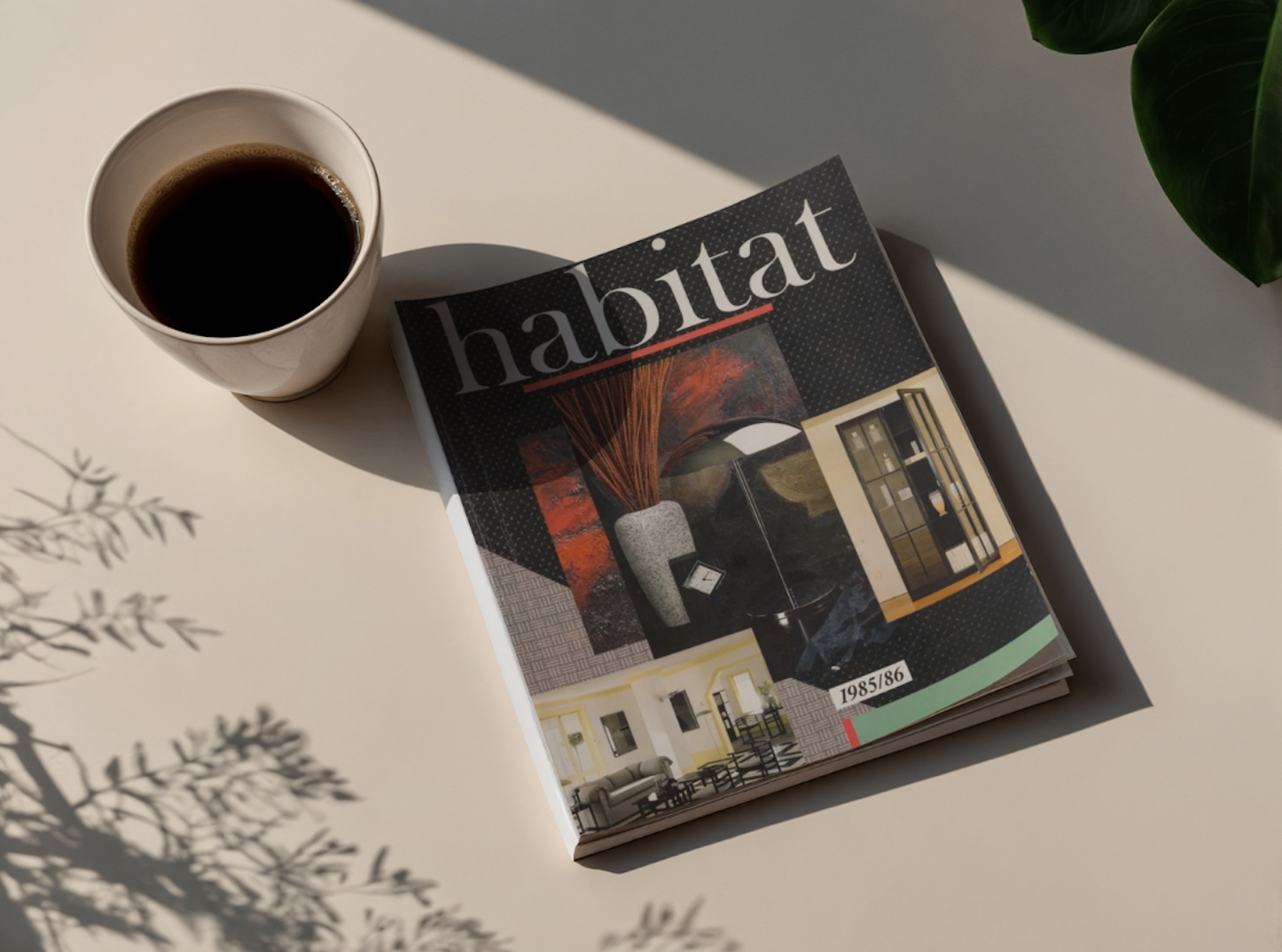
Habitat Catalogue 1985/86
The junior pipeline is thinner.
A whole layer of practical retail apprenticeship — visual merchandising, showroom assistance, product specification at scale — has quietly evaporated. Studios used to receive juniors who’d worked at Habitat or Heal’s and understood furniture viscerally. That candidate is no longer available. The replacement is usually a design-school graduate who has never sold a sofa or lamp to anyone.
The higher end is becoming a closed loop.
Trade-only suppliers, designer-direct platforms, Pimlico Road, the Decorative Antiques and Textiles Fair, the same British makers everyone respects. The system increasingly serves itself. Without a healthy middle, the senior end becomes more insular, more expensive, and harder for newcomers — whether designers, makers, or clients — to enter. None of which is good for the long-term health of the discipline.
The deeper question
A country’s design culture doesn’t sit only at the top. It depends on a functioning middle to feed the top with talent and taste. The UK has lost that middle in less than a decade — and senior studios have been too busy specifying around it to notice properly.
We should probably take notice.
Has anyone seen evidence the middle is rebuilding somewhere, or is the hollowing out continuing? Genuinely interested in what you’re seeing.